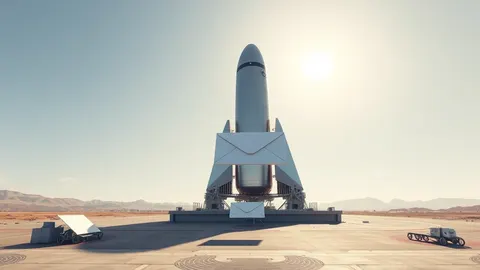
New US medium-lift rockets aim to fill commercial gap left by retiring Falcon 9
Four domestic rocket makers are developing new vehicles as SpaceX phases out Falcon 9, addressing a critical gap in launch capacity for satellite operators.
Key points
- SpaceX is removing the Falcon 9 rocket from the commercial market as early as 2028.
- Four new US-developed medium-lift rockets are forthcoming, featuring domestically built engines.
- Satellite operators face uncertainty regarding launch availability for the 2027 to 2030 timeframe.
SpaceX is pulling the Falcon 9 rocket from the commercial launch market as soon as 2028, according to an analysis by Ars Technica. This departure creates a significant gap in the medium-lift sector, prompting a competitive rush among four US companies to bring new rocket vehicles online for commercial clients.
The medium-lift category is defined by a payload capacity of 2 to 20 metric tons. The Antares vehicle, developed by Orbital Sciences Corporation, was the last new entrant in this class in the United States, debuting 13 years ago. Since that time, the landscape has shifted dramatically toward vertically integrated manufacturing, moving away from the international supply chains that characterized earlier programs like Antares.
Context and Background
The original Antares 100-series rocket relied on refurbished Soviet-era engines that Aerojet acquired in the 1990s. These engines had origins dating back to the Apollo moon landing era. The reliance on aging foreign hardware proved problematic; on its fifth launch in 2014, an Antares rocket exploded, highlighting the risks of using obsolete propulsion systems.
Ars Technica notes that the Antares vehicle also featured a core stage manufactured in Ukraine. In contrast, four forthcoming rockets currently in development have engines built entirely by their respective manufacturers within the United States. This shift represents a strategic move to control timelines and reduce costs, a lesson derived largely from SpaceX’s success with the Falcon 9.
Who Is Affected
Satellite operators are currently struggling to plan their launch schedules for the 2027 to 2030 period due to market uncertainty. With the Falcon 9 exiting the commercial sales channel, customers lack a clear, reliable option for booking medium-sized payloads. The larger Vulcan and New Glenn rockets already have full manifests and are considered too expensive for small- and medium-sized satellites, leaving a void in the market.
There are significant financial implications for this race, as fortunes are at stake for commercial space startups that depend on affordable launch services. However, it remains unclear which of the new medium-lift vehicles will be ready in time and capable of scaling up their launch cadence to meet demand. Ars Technica emphasizes that the engineering work required to bring these vehicles to fruition is extremely difficult.
What should you do?
Organizations dependent on space launch services should monitor the progress of these four forthcoming rocket programs to assess potential service windows. Satellite operators should review their long-term launch contracts for the 2027 to 2030 period to identify exposure to single-provider risks. Industry stakeholders should track official announcements regarding the readiness and scalability of new medium-lift vehicles.
What to do and how to stay safe: SpaceX
- Review long-term launch contracts for dependencies on retiring rocket families like Falcon 9.
- Monitor official status updates from the four US companies developing new medium-lift rockets.
- Assess alternative launch options, including larger vehicles, for payloads that may not fit new medium-lift capacities.
- Engage with industry analysts to track the evolving launch cadence and availability of domestic providers.
Step-by-step guide: Mobile Device Security: How to Protect Data Beyond Passwords
General security guidance from the Threat Times newsroom. It is not confirmed advice from the organisations named in this story.
Frequently asked questions
When is SpaceX removing Falcon 9 from the commercial market?
SpaceX is pulling the Falcon 9 rocket from the commercial market as soon as 2028.
What defines a medium-lift rocket?
A medium-lift rocket is defined as having a lift capacity of 2 to 20 metric tons.
Why are the new rockets different from the Antares vehicle?
The new rockets feature engines built by their manufacturers in the United States, whereas Antares used refurbished Soviet engines and a Ukrainian-built core stage.